

Coating system ROI is rarely driven by material cost alone. For facility managers, the real return is determined by durability, downtime reduction, labor efficiency, and compliance risk over the full lifecycle of the coating system.
When evaluating protective coating upgrades, discussions often stall at purchase price. This narrow focus obscures the broader financial impact coatings have on operations, maintenance planning, and long-term asset protection.
The more meaningful question is not how much a coating costs per gallon, but how its performance shapes total cost of ownership across the facility lifecycle.
Why Legacy Coating Systems Create Hidden Costs
Many facilities still operate with coating systems specified years or even decades ago, when material science, regulatory expectations, and performance requirements were fundamentally different. Over time, the gap between legacy specifications and modern coating capabilities creates inefficiencies that quietly compound.
Outdated coatings often require:
- More frequent reapplication
- Longer downtime during maintenance
- Higher labor investment
- Increased compliance oversight
- Greater risk of substrate degradation
These costs rarely appear in procurement comparisons, yet they shape operational budgets year after year. Building a defensible business case for coating upgrades means making these hidden costs visible and measurable.
Moving Beyond Purchase Price: Total Cost of Ownership

Total cost of ownership (TCO) provides the foundation for meaningful ROI analysis. Protective coatings incur costs across their entire lifecycle—from surface preparation and application to maintenance, reapplication, and eventual replacement.
Key TCO components include:
- Surface preparation requirements
- Application labor and complexity
- Cure time and return-to-service windows
- Service life and recoat frequency
- Maintenance and touch-up demands
- End-of-life replacement impact
A coating with a higher upfront cost but significantly longer service life can fundamentally alter the economics of facility maintenance. Fewer recoating cycles reduce labor hours, material consumption, downtime events, and disruption to operations. Over time, these savings often outweigh material price differences by a wide margin.
Quantifying Downtime and Productivity Impact

For many facilities, downtime represents the largest cost driver in coating decisions. Every hour a production line, processing area, or operational zone is offline carries direct revenue impact and secondary effects on scheduling, staffing, and customer commitments.
Coating systems influence downtime in two critical ways:
Downtime Duration
Fast-cure coatings that allow rapid return to service minimize shutdown periods and reduce overtime labor. Completing coating work within standard maintenance windows—rather than extended shutdowns—creates immediate operational and financial advantages.
Downtime Frequency
Durable coatings reduce how often recoating is required. Extending service life from three years to seven years, for example, dramatically reduces cumulative downtime, planning effort, and labor investment over the facility lifecycle.
Together, these factors create compounding productivity gains that materially affect ROI calculations.
Durability as an Asset Protection Strategy
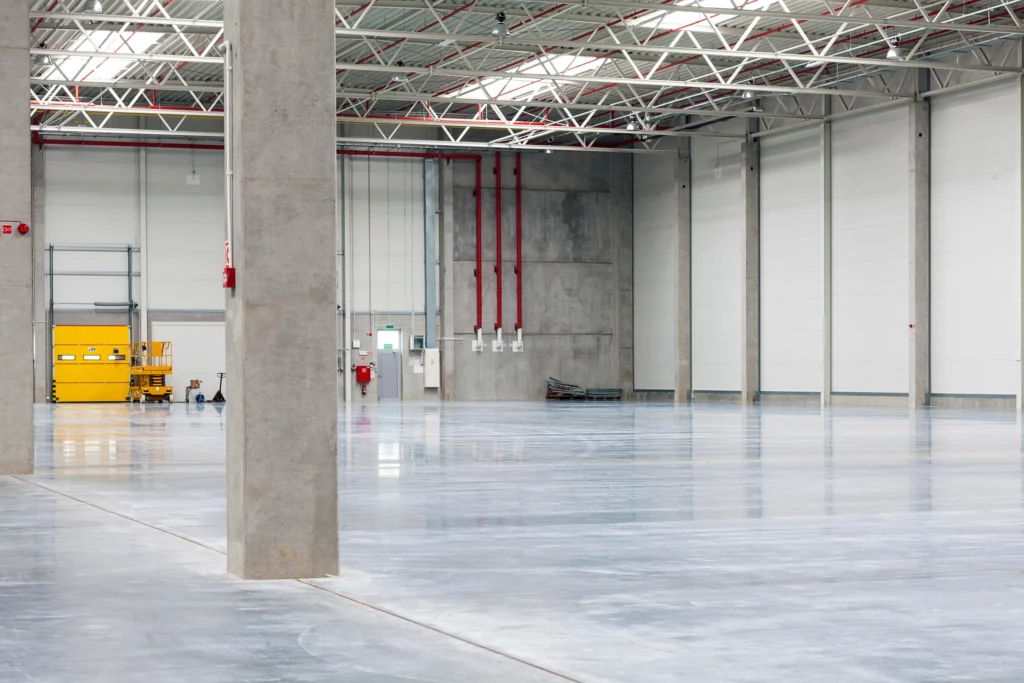
Protective coatings serve as the primary defense for facility substrates such as concrete, steel, wood, and composite materials. When coatings fail prematurely, damage accelerates beneath the surface—often leading to repair costs that far exceed the original coating investment.
Effective coatings:
- Prevent moisture intrusion and corrosion
- Resist chemical and abrasion damage
- Maintain barrier integrity under thermal stress
- Protect structural and aesthetic performance
Evaluating coating durability through the lens of asset protection shifts the ROI discussion from maintenance expense to capital preservation. Substrate remediation, structural repair, and operational disruption represent financial risks that durable coatings are designed to prevent.
Compliance Risk and Cost Avoidance
Regulatory compliance introduces both direct costs and risk exposure. Facilities in food processing, healthcare, manufacturing, and other regulated environments must meet evolving standards related to indoor air quality, worker exposure, and material safety.
Coatings with low VOC profiles offer measurable operational advantages:
- Reduced ventilation requirements
- Faster return-to-occupancy
- Simplified safety protocols
- Lower documentation and reporting burden
Third-party certifications strengthen the business case. USDA BioPreferred certification validates plant-based content, while Intertek Clean Air GOLD certification confirms indoor air quality performance. These credentials provide defensible procurement justification and reduce compliance risk—an insurance value that belongs in ROI calculations.
Labor Efficiency and Application Economics

Labor frequently represents the largest line item in coating projects. Application efficiency depends on how easily a coating applies, how many coats are required, and how complex surface preparation must be.
Coatings that:
- Require fewer passes
- Level consistently
- Cure quickly
- Work within broader environmental conditions
reduce labor hours and accelerate project completion. In contrast, systems requiring specialized equipment, extended cure times, or complex preparation protocols increase costs that often exceed material price differences.
Understanding these variables allows facilities to model realistic project costs rather than relying on theoretical material pricing.
Building a Defensible Decision Framework
A structured ROI framework transforms coating upgrades from subjective decisions into defensible investments.
Effective evaluation includes:
- Defining an analysis period aligned with realistic coating lifecycles
- Documenting current coating-related costs comprehensively
- Comparing alternatives against facility-specific requirements
- Modeling lifecycle costs under multiple performance scenarios
- Incorporating compliance risk and operational impact
This approach reveals which variables truly drive ROI and allows stakeholders to evaluate tradeoffs with confidence.
Plant-Based Protective Coatings as a Materials Technology Solution
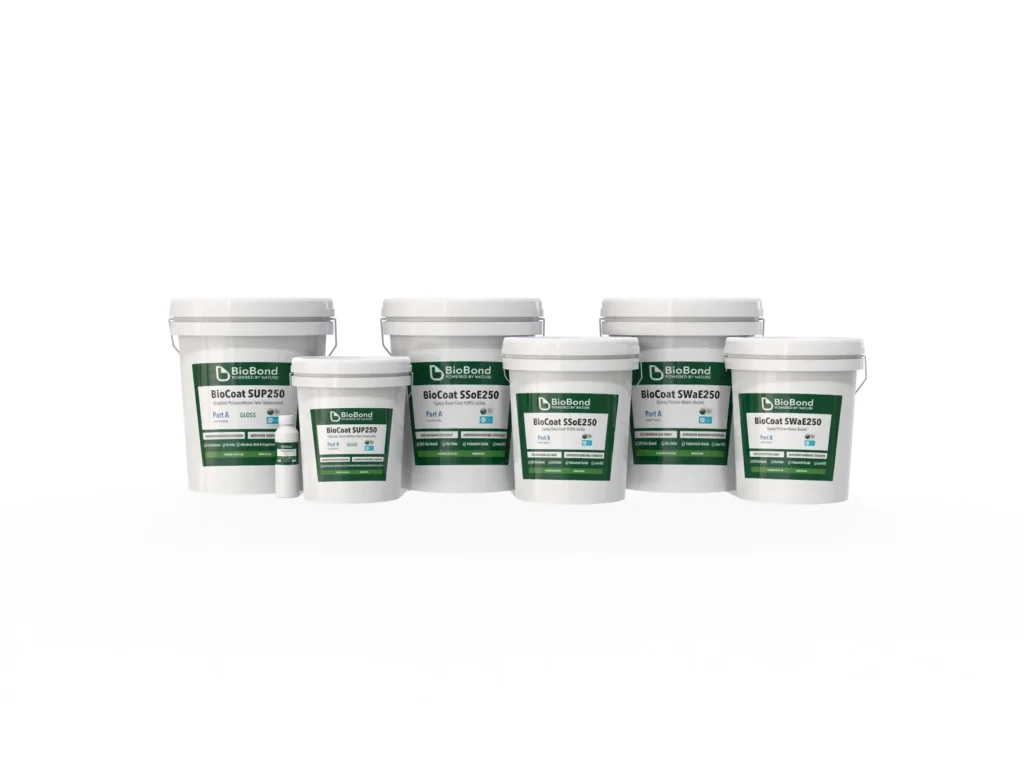
BioBond protective coatings reflect the evolution of coating technology toward performance-driven, plant-based formulations. These systems are engineered to deliver durability, application efficiency, and long service life while supporting safer and healthier facility environments.
Key advantages include:
- Durable performance across demanding conditions
- Low VOC profiles that reduce downtime and safety constraints
- No added microplastics for forward-looking compliance positioning
- Third-party certifications supporting procurement and regulatory documentation
Rather than offering one-size-fits-all products, BioBond works with facilities to align coating solutions with specific operational requirements—ensuring ROI is achieved in real-world conditions.
Making the Business Case Internally
Successful proposals translate technical performance into outcomes that matter to stakeholders:
- Operations teams focus on uptime and reliability
- Finance teams evaluate lifecycle cost and predictability
- Compliance teams prioritize risk reduction and documentation
Presenting side-by-side lifecycle cost comparisons, quantifying avoided downtime, and highlighting compliance risk reduction creates a compelling, defensible case for upgrade approval.
Putting It All Together
Evaluating coating upgrades through an ROI framework reveals opportunities to improve durability, reduce operational disruption, and lower total cost of ownership. When coatings are viewed as strategic assets rather than maintenance expenses, decision-making shifts toward long-term performance and resilience.
Material technology continues advancing, giving facility managers access to coating systems that perform across multiple dimensions—durability, efficiency, compliance, and cost control. BioBond protective coatings exemplify this evolution, providing solutions designed to support operational excellence over the full facility lifecycle.
Learn more about how BioBond protective coatings can support your facility’s performance objectives:
- Protective Coatings:CoatingsInfo@biobondadhesives.com
- Adhesives: AdhesivesInfo@biobondadhesives.com
- General Inquiries: info@biobondadhesives.com
Or visit our Contact page.
BioBond: Better Price. Better Performance. Better for Everyone.


