

Public restrooms are one of the few spaces where moisture, biological contamination, harsh chemicals, and heavy foot traffic all intersect—every single day. Unlike most interior environments, restroom floors are continuously exposed to water, organic matter, and repeated cleaning cycles.
Public Restroom Floors Are a High-Risk Environment
This combination creates ideal conditions for bacteria, mold, and fungus to persist and spread, particularly when flooring systems begin to wear, crack, or delaminate.
Restroom environments are recognized as high-contact, high-moisture areas where pathogens can be transferred via shoes, splashing, and surface contact. Floors act as a collection point for contaminants that can be redistributed throughout a facility.
Restrooms Create Ideal Conditions for Bacteria, Mold, and Fungus
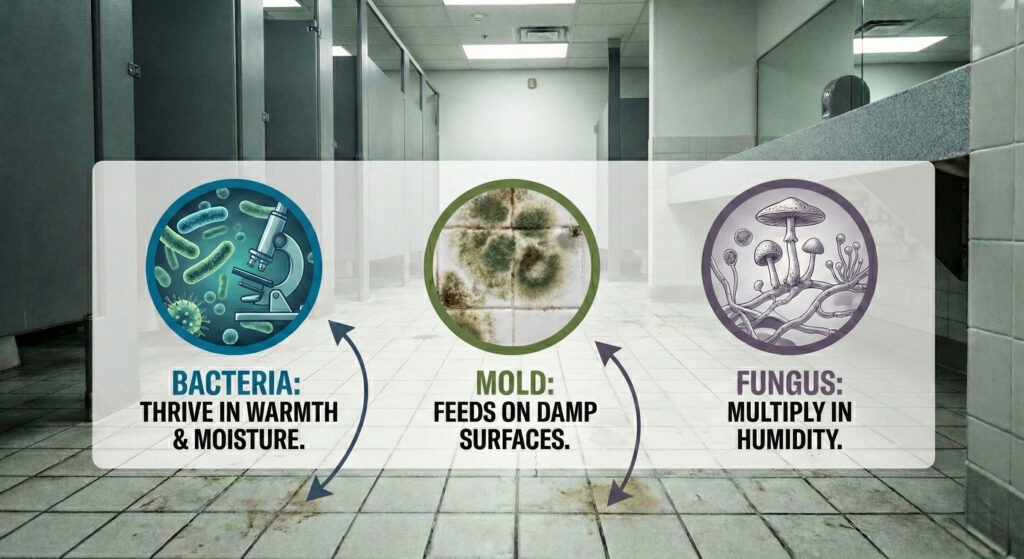
Restroom floors are not just dirty—they are biologically active environments.
Persistent moisture, limited airflow, and porous or damaged surfaces allow microorganisms to thrive, especially in grout lines, cracks, and worn coatings. Once established, mold and fungal growth can be difficult to fully eliminate without addressing the underlying surface conditions.
The CDC has documented that toilet flushing can aerosolize biological particles that settle onto nearby surfaces, including floors. Over time, these particles accumulate, particularly on flooring systems that cannot be fully sealed or effectively sanitized.
In addition, mold and fungal growth are not only hygiene concerns—they can contribute to odor issues, surface degradation, and long-term facility maintenance challenges.
Indoor Air Quality Matters More Than Most Facilities Realize
Restrooms are enclosed spaces with frequent chemical use. According to the Environmental Protection Agency, indoor air can be 2–5 times more polluted than outdoor air, especially in areas where cleaners, coatings, and building materials emit volatile compounds.
Traditional flooring systems and high-solvent coatings can compound this issue during installation and repair, creating odor complaints and limiting when spaces can be safely reopened.
In public restrooms—especially in schools, healthcare facilities, and assisted living environments—air quality is part of the overall safety equation.
Why Traditional Restroom Flooring Systems Break Down
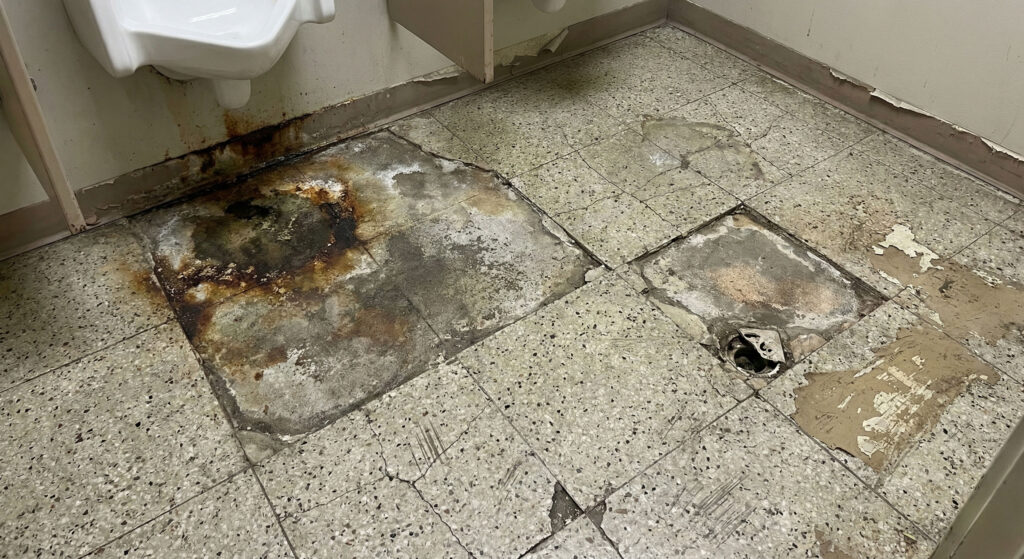
Many conventional restroom floor coatings were not designed for constant moisture and biological exposure.
Common failure points include:
- Moisture intrusion beneath coatings, enabling microbial growth
- Surface degradation from aggressive cleaning chemicals
- Porous wear zones that trap bacteria, mold, and fungus
- Odor retention caused by contamination below the surface
- Extended downtime during recoating or repairs
Once flooring systems fail, cleaning alone is no longer enough—protection must be rebuilt at the surface level.
BioDefend™: Antimicrobial Protection for Public Restroom Floors
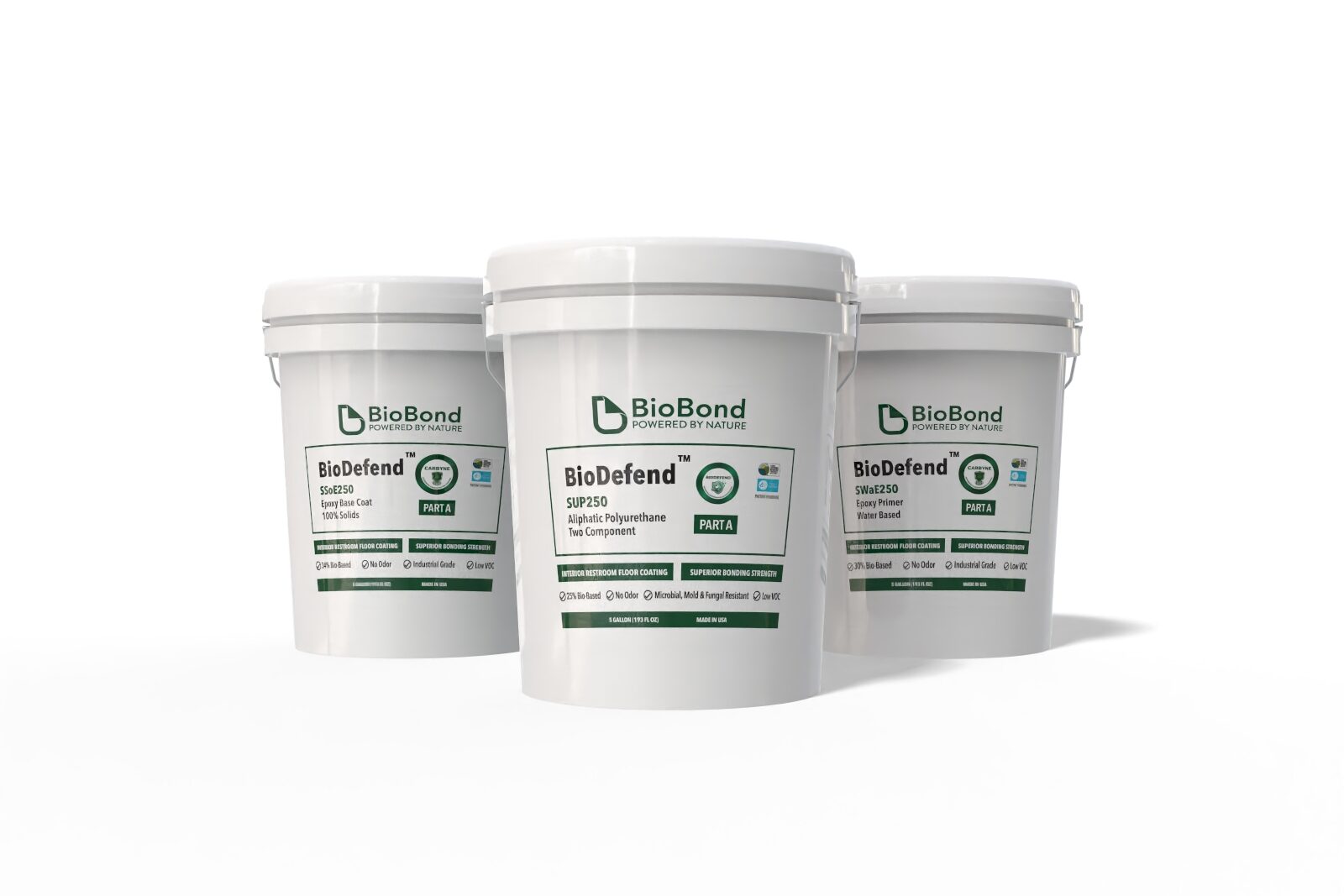
BioDefend™ protective coatings are engineered specifically for high-risk environments where hygiene, durability, and long-term surface protection are critical.
BioDefend™ restroom floor coatings feature antimicrobial technology designed to inhibit the growth of bacteria, mold, and fungus on the coated surface. This added layer of protection helps facilities maintain cleaner, more manageable environments between routine sanitation cycles.
Key benefits of BioDefend™ include:
- Antimicrobial surface protection
- Strong adhesion to concrete and common restroom substrates
- Resistance to moisture intrusion and standing water
- Seamless, cleanable flooring surfaces
- Stops odors to support safer indoor environments
- Faster return to service compared to traditional systems
By combining antimicrobial performance with plant-based chemistry and no added microplastics, BioDefend™ addresses real restroom challenges without relying on petroleum-heavy formulations.
Designed for Facilities That Can’t Afford Downtime
Public restrooms cannot remain closed for extended periods. BioDefend™ coatings are formulated to cure efficiently with minimal odor during application—allowing facilities to reduce disruption while upgrading protection.
BioDefend™ is well suited for:
- Schools and universities
- Airports and transportation hubs
- Government and municipal buildings
- Healthcare and assisted living facilities
- Retail and hospitality restrooms
Restroom Floors Should Do More Than Look Clean
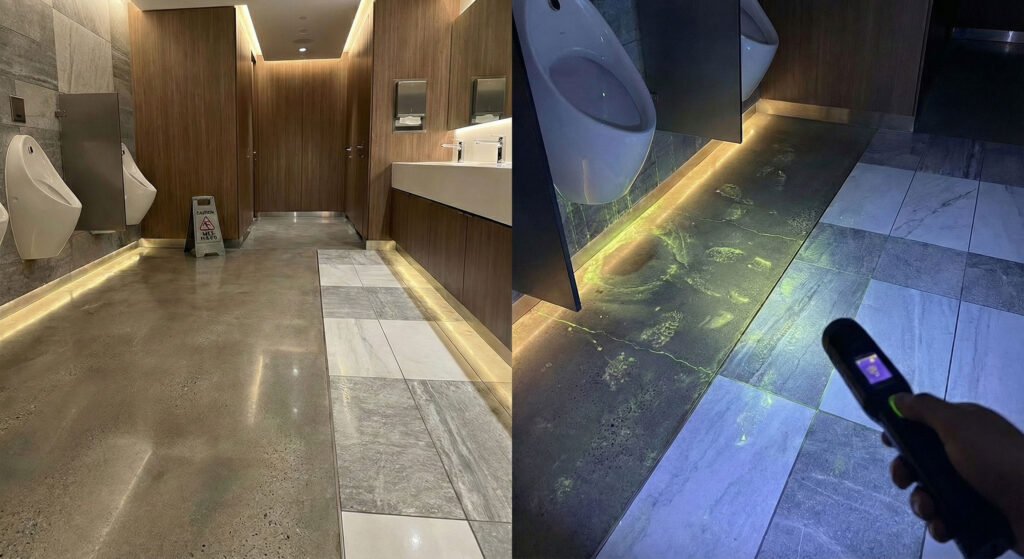
Restroom floors play a critical role in hygiene, air quality, and long-term facility performance. When coatings fail, facilities face increased maintenance costs, sanitation challenges, and user discomfort.
BioDefend™ reframes restroom flooring as a protective system, not just a surface finish.
Ready to Protect Your Public Restrooms?
If you’re evaluating options for restroom floor upgrades—or struggling with recurring maintenance, odor, or contamination concerns—BioBond can help.
Contact BioBond in the contact form below to learn how BioDefend™ restroom floor coatings can support safer, more durable public facilities and reduce long-term maintenance challenges.
Public restrooms demand protection.
BioBond
Better Price. Better Performance. Better for Everyone.


