

Garage Floor Coatings Should Be Evaluated on Performance, Not Polyaspartic Speed of Drying
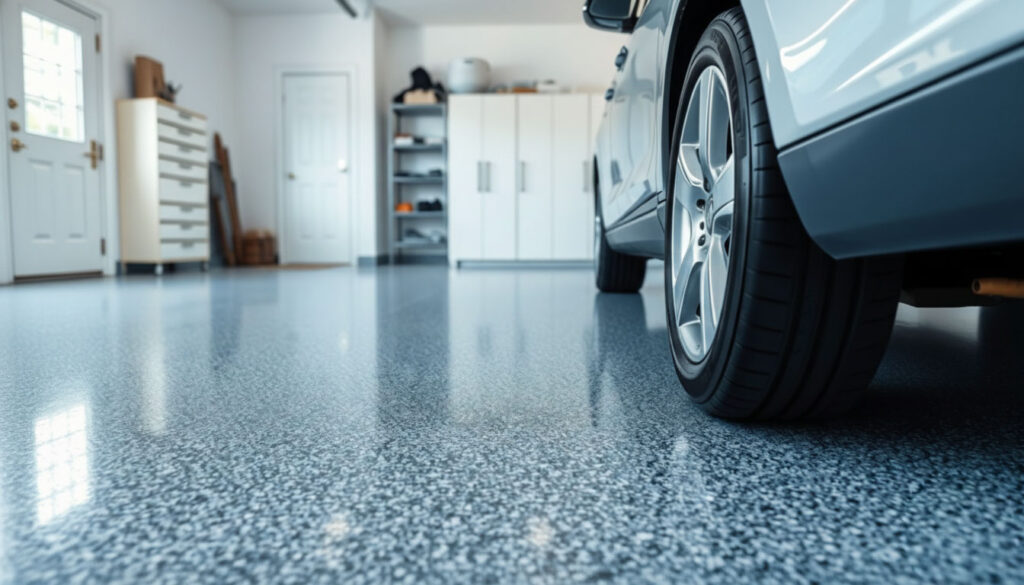
Garage floor coatings are often selected based on how quickly a space can return to service. Polyaspartic systems have built their reputation almost entirely around rapid cure times and same-day installations. While speed can be appealing, it is only one variable in a much larger performance equation.
For contractors, facility managers, and building owners, garage floor coatings must deliver reliable adhesion, long-term durability, manageable installation conditions, and predictable lifecycle performance. Coatings that cure quickly but fail prematurely, creates air quality concerns, or limits installation control ultimately increases cost and risk.
BioBond’s Carbyne™ approaches garage floor coatings from a performance-first perspective. Rather than optimizing solely for cure speed, BioBond engineers protective coatings that balance installation efficiency with material stability, substrate compatibility, and long-term surface protection.
Understanding the Polyaspartic Value Proposition and Its Limitations
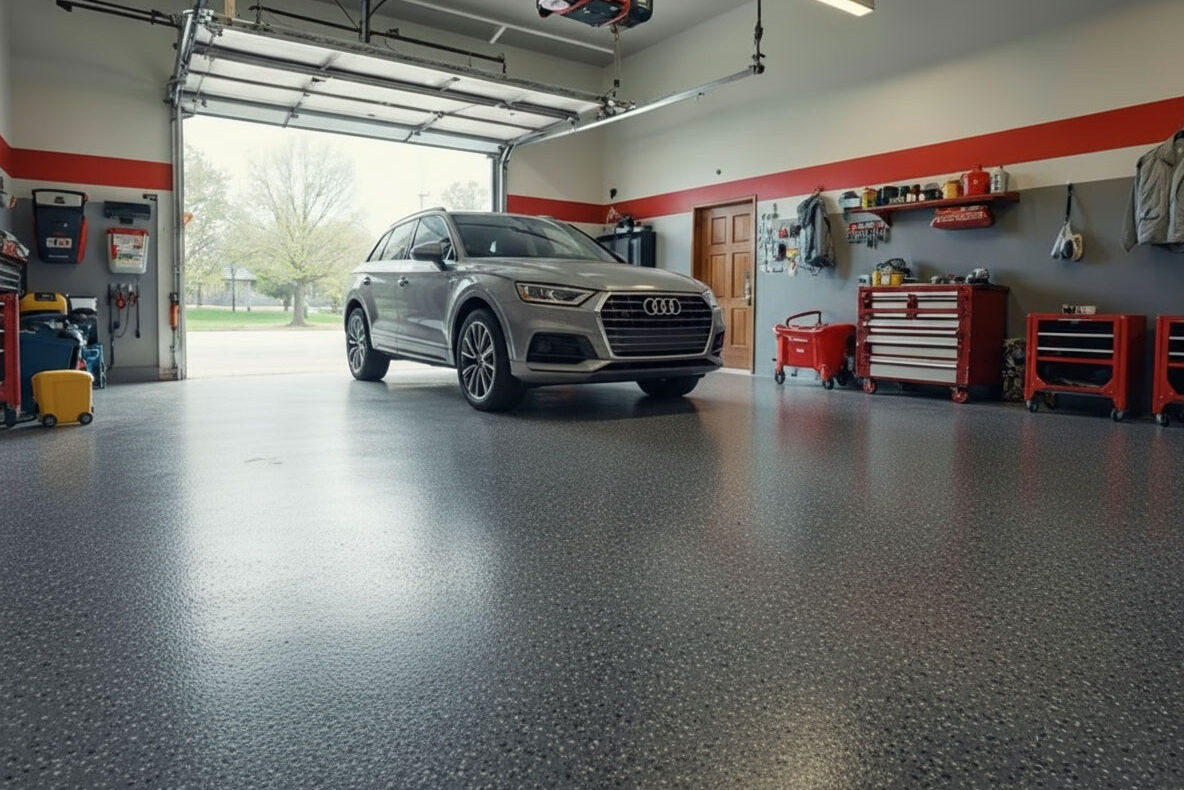
Polyaspartic coatings are a subtype of polyurea chemistry designed to react extremely quickly once mixed. This rapid reaction allows installers to coat and reopen floors within hours. However, that same reactivity introduces constraints that are often minimized or overlooked during sales discussions.
The primary challenge with polyaspartic systems is their narrow application window. Installers must work rapidly, often under time pressure, which increases the likelihood of uneven film build, roller lines, pinholes, trapped air, and inconsistent coverage. Any mistake becomes permanent once the coating sets.
Additionally, polyaspartic coatings typically require very tight control of temperature and humidity. Deviations in ambient conditions can affect cure behavior, gloss, adhesion, and overall performance. In real-world garage environments, especially residential or mixed-use facilities, these conditions are rarely ideal.
Polyaspartic systems also tend to rely on higher VOC formulations and emit strong odors during application. This can limit where and when coatings can be applied, particularly in attached garages, occupied buildings, or facilities with air quality sensitivities.
Installation Control Matters More Than Cure Time
One of the most significant differences between BioBond’s Carbyne™ and polyaspartic systems is application control.
Carbyne™ garage floor coatings are engineered to provide two to three times workable open time that allows installers to properly prepare the substrate, achieve consistent wet-out, and build uniform film thickness. This reduces the risk of surface defects and improves adhesion to concrete substrates.
Controlled cure chemistry enables installers to work methodically rather than reactively. This is particularly important for larger garages, complex layouts, or projects where precision and finish quality matter as much as turnaround time.
From a contractor standpoint, greater application control reduces rework, minimizes callbacks, and improves overall project predictability.
Adhesion and Substrate Compatibility Over the Long Term
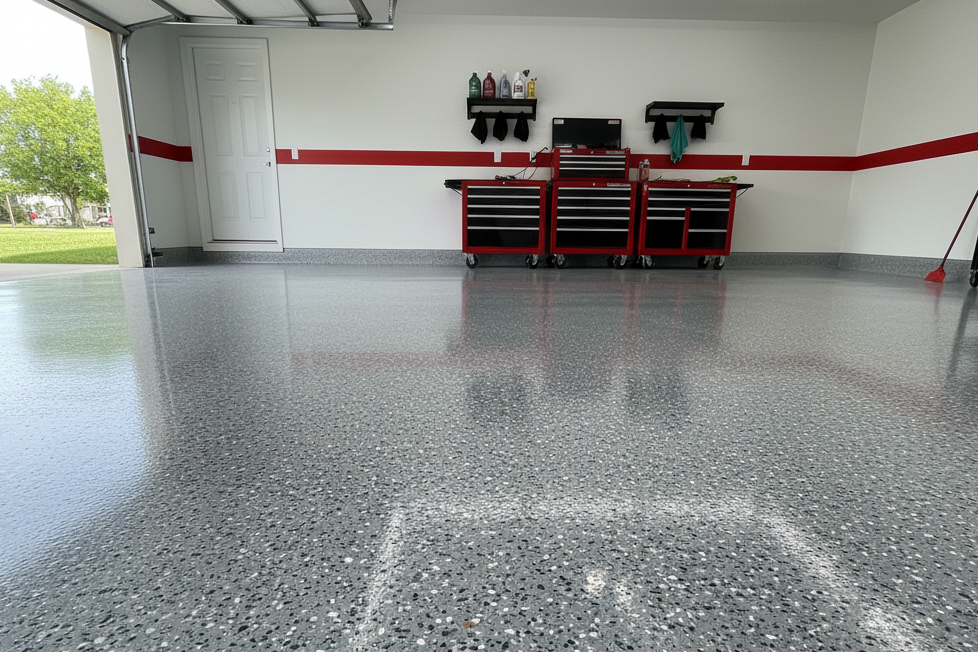
Concrete is not a static material. It expands and contracts with temperature changes, transmits moisture vapor, and develops microcracks over time. Coating systems must accommodate this movement without losing adhesion or integrity.
Polyaspartic coatings, due to their fast cure and rigid chemistry, can struggle under these conditions. When concrete movement or moisture vapor transmission exceeds system tolerances, coatings may crack, delaminate, or fail prematurely.
Carbyne™ is engineered with material flexibility and substrate interaction in mind. By allowing proper penetration and bonding during application, Carbyne™ creates a stronger interface with concrete that holds up under mechanical stress, thermal cycling, and moisture exposure.
This approach improves coating longevity and reduces the risk of early failure — a critical factor when evaluating total cost of ownership.
Air Quality and Exposure Are Part of Performance
Air quality considerations are increasingly important in both residential and commercial environments. Strong odors, elevated VOC emissions, and prolonged off-gassing can disrupt operations, delay occupancy, and raise concerns for installers and building occupants.
Carbyne™ garage floor coatings are low VOC and formulated to minimize odor during application. This allows coatings to be installed in attached garages, mixed-use buildings, and occupied facilities with less disruption.
For contractors, this expands the range of projects that can be completed without scheduling around extended ventilation or evacuation periods. For facility teams, it supports safer installation practices and better overall environmental conditions.
Durability That Supports Predictable ROI
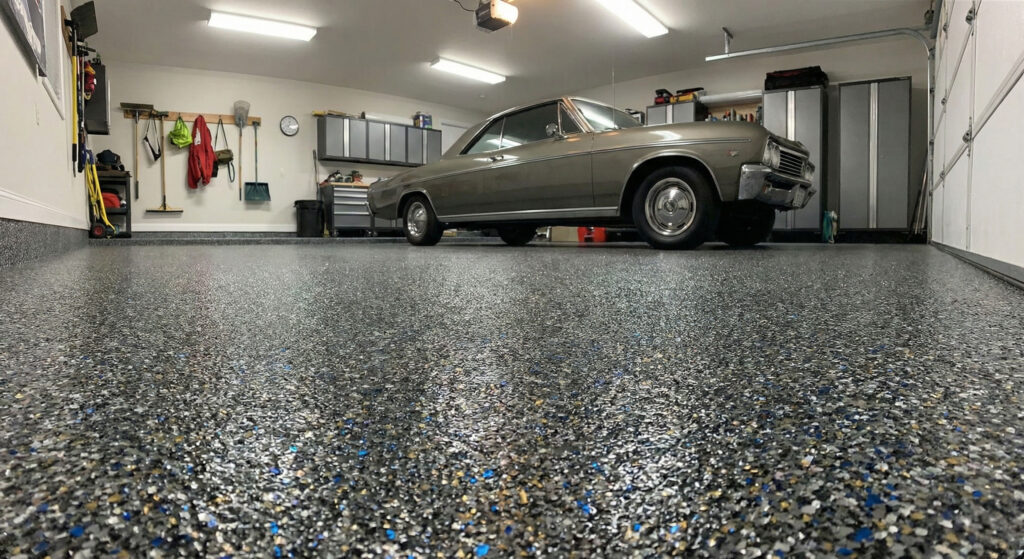
The true cost of a garage floor coating is not determined at installation, it is determined over years of use.
Carbyne™ engineered to resist abrasion, chemical exposure, hot tire pickup, and surface wear without becoming brittle or degrading prematurely. By prioritizing material stability over cure speed, BioBond coatings maintain performance under demanding conditions.
This durability translates directly into ROI. Fewer repairs, longer service life, and reduced maintenance cycles lower total cost of ownership and improve budget predictability for facility managers and property owners.
Designed for Real-World Conditions, Not Idealized Scenarios
Many coating systems perform well under controlled laboratory conditions but struggle in real-world installations. Garages vary widely in temperature, humidity, concrete quality, and moisture content, as well as UV exposure.
Carbyne™ coatings are designed with this variability in mind. Their application flexibility and controlled cure chemistry allow successful installation across a broader range of conditions, making them a practical solution for both residential and commercial garages.
This adaptability reduces scheduling risk and allows projects to proceed without excessive environmental constraints.
A Smarter Alternative to Polyaspartic Garage Floor Coatings
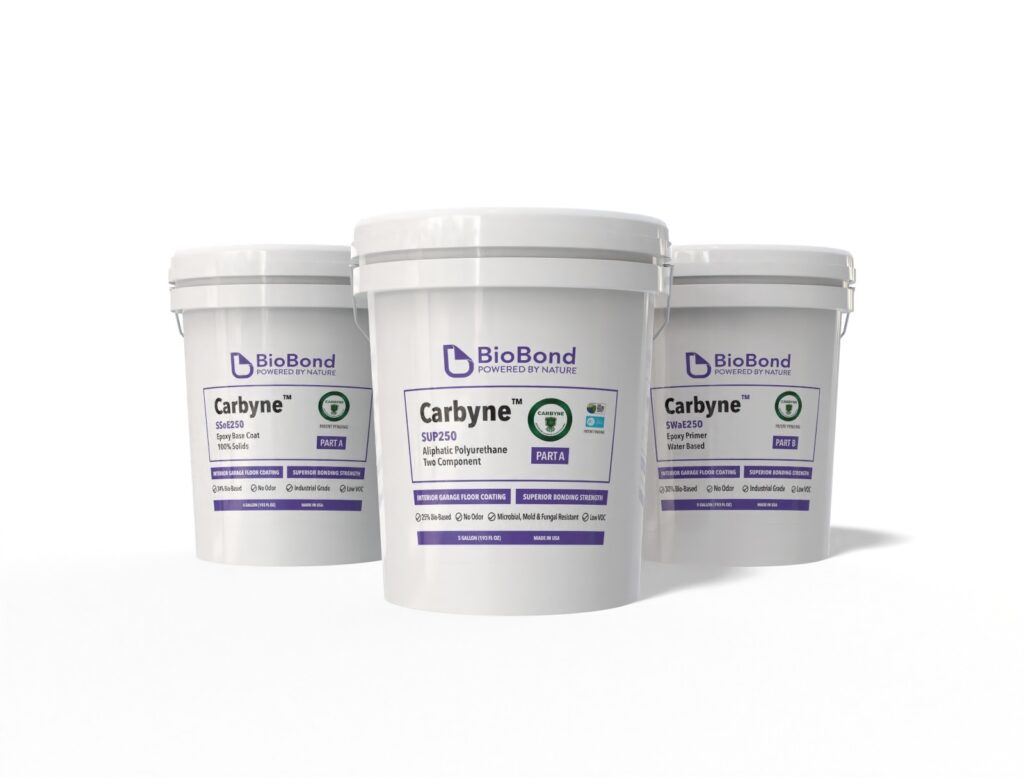
Polyaspartic systems may offer speed, but speed alone does not define coating quality or long-term value. When durability, application control, air quality, and lifecycle performance are considered, BioBond’s Carbyne™ garage floor coatings present a more balanced and reliable solution.
For contractors, facility managers, and specifiers seeking garage floor coatings engineered for real-world performance rather than marketing claims, BioBond delivers coatings built to last.
Ready to Evaluate a Smarter Garage Floor Coating System?
If you’re comparing polyaspartic systems or reassessing long-term coating performance, BioBond’s Carbyne™ garage floor coatings provide a durable, low VOC alternative engineered for real-world conditions. Our technical team works directly with contractors, facility managers, and specifiers to evaluate substrates, application environments, and performance requirements before a system is selected.
Protective Coatings Inquiries:
📧 CoatingsInfo@biobondadhesives.com
General Inquiries:
📧 info@biobondadhesives.com
Or fill out the contact form below to request a materials consultation tailored to your project scope and operational needs.


