

In facility planning and specification discussions, skepticism often arises the moment petroleum-free protective coatings enter the conversation. The question is familiar and predictable: Will it hold up under real operating conditions?
This concern reflects a long-standing assumption in industrial surface protection—that durability is inherently tied to petroleum-based chemistry. While understandable given historical context, this belief no longer reflects modern coating formulation or performance data.
Today’s protective coating technologies tell a different story.
Where the Durability Assumption Comes From
For decades, petroleum-based protective coatings dominated industrial and commercial facilities because they were among the first systems engineered for large-scale manufacturing, food processing, and institutional use. Their widespread adoption created a strong association between petroleum chemistry and surface reliability.
Early plant-based coatings entered the market under different positioning. Many were introduced as alternative materials rather than performance-driven surface protection systems, reinforcing the idea that petroleum-free options required functional tradeoffs.
Over time, this narrative became embedded in specifications and procurement habits—even as coating formulation science advanced significantly. The result was a false dichotomy: petroleum-based coatings were viewed as durable and proven, while plant-based coatings were perceived as limited. That distinction no longer holds.
What Actually Determines Durability in Protective Coatings
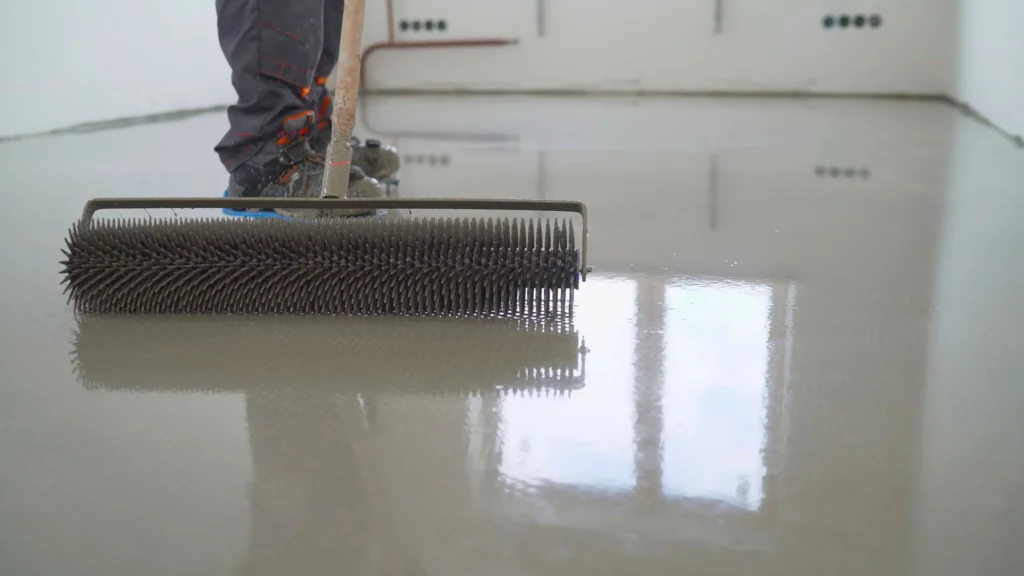
Durability in protective coatings is not determined by petroleum content. It is determined by formulation design, polymer structure, and surface interaction.
Coating performance depends on factors such as:
- Surface adhesion and wetting
- Film integrity and crosslink density
- Resistance to abrasion, chemicals, and moisture
- Stability under thermal cycling and sanitation protocols
None of these mechanisms inherently require petroleum-derived ingredients. Modern plant-based polymers can be engineered to achieve the same protective characteristics through alternative chemical pathways. When properly formulated, they deliver long-term durability comparable to traditional coating systems.
Advances in polymer engineering now allow plant-based protective coatings to perform reliably across demanding industrial environments, including food processing and high-sanitation facilities.
What Performance Testing Shows

Protective coatings are evaluated using standardized performance testing—not assumptions. Metrics such as abrasion resistance, chemical resistance, flexibility, adhesion strength, and temperature tolerance are measured independently of ingredient origin.
When petroleum-free protective coatings undergo the same testing protocols as conventional systems, results consistently show that durability is driven by formulation quality, not petroleum content. Well-engineered plant-based coatings meet or exceed performance specifications required for industrial and commercial surface protection.
In short, durability is the outcome of coating engineering—not raw material category.
The Operational Cost of Holding Onto Outdated Assumptions

Relying on petroleum-based coatings solely due to perceived durability introduces operational costs beyond surface performance.
Traditional solvent-heavy coating systems often carry higher VOC profiles, which can result in:
- Increased ventilation requirements
- Extended downtime during application and curing
- Additional PPE requirements
- Expanded compliance documentation
- Greater long-term regulatory exposure
As indoor air quality and worker exposure standards continue to tighten, these factors increasingly affect total cost of ownership. Facilities that continue specifying coatings based on outdated assumptions risk higher administrative burden and future retrofitting costs.
Petroleum-free protective coatings with low VOC profiles provide a more resilient approach—without requiring performance compromises.
Updating the Coating Selection Framework
The persistence of the durability myth is less about coating limitations and more about legacy decision frameworks. Many facilities still rely on specifications developed when plant-based coating technology was in its early stages.
Today, performance data and real-world applications tell a different story. The relevant question is no longer whether petroleum-free protective coatings can perform—but whether organizations are willing to reassess assumptions in light of current evidence.
Facilities that do so gain access to surface protection solutions that support durability, compliance, and operational efficiency sim
BioBond’s Formulation-First Approach to Protective Coatings
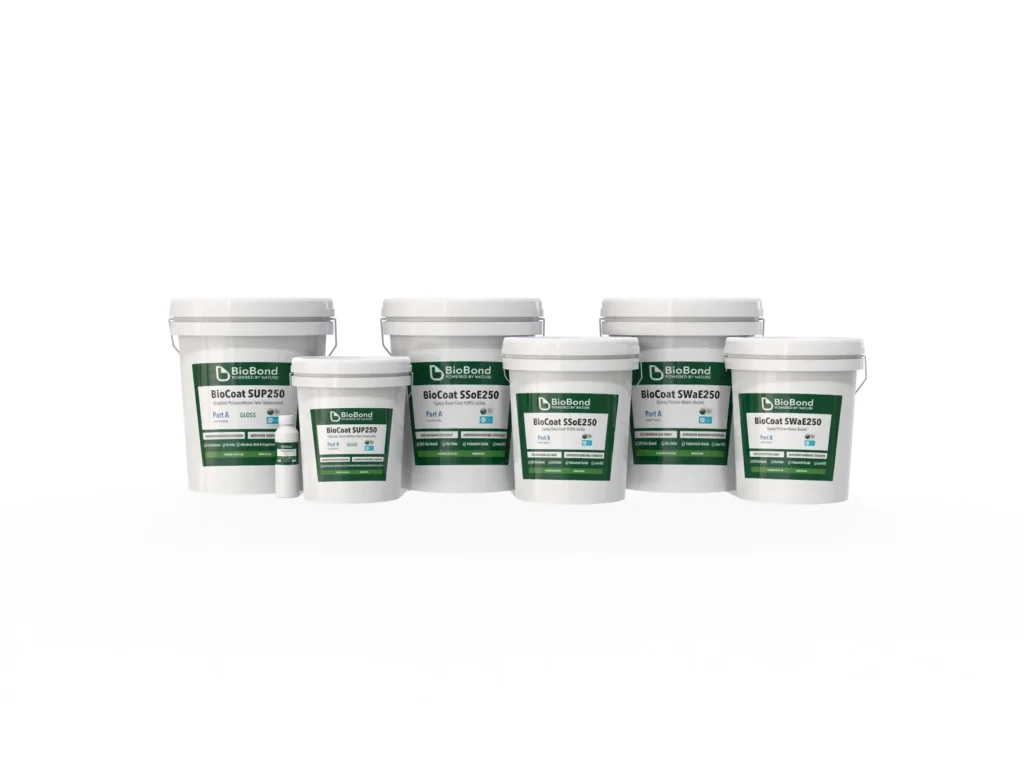
BioBond develops plant-based protective coatings engineered specifically for industrial and commercial surface protection. Rather than prioritizing ingredient origin alone, each formulation is designed around:
- Application environment
- Substrate compatibility
- Sanitation and chemical exposure
- Long-term surface durability
This formulation-first approach demonstrates that petroleum-free protective coatings can meet the demands of modern facilities while supporting safer and healthier work environments. The goal is not to replace performance with principle—but to deliver both through advanced coating science.
Moving Past the Myth
The association between petroleum chemistry and coating durability was shaped by history, not by immutable science. Material innovation has closed the gap that once defined this tradeoff, allowing facilities to adopt protective coatings aligned with modern performance, compliance, and operational expectations.
Organizations that continue relying on outdated assumptions risk overlooking coating systems that deliver equal reliability with fewer downstream complications. Those willing to reassess benefit from a broader, more strategic set of surface protection options.
Talk With BioBond About Protective Coatings
Ready to explore how plant-based material technology delivers the performance your projects demand? Contact BioBond to discuss how our formulations challenge conventional thinking while meeting your specifications. If you’re evaluating protective coating performance, compliance requirements, or long-term surface durability, BioBond’s team can help assess options aligned with your facility’s needs.
- Protective Coatings: CoatingsInfo@biobondadhesives.com
- General Inquiries: info@biobondadhesives.com
BioBond develops plant-based protective coatings engineered for durability, compliance, and long-term performance.
Or visit our Contact page.
BioBond: Better Price. Better Performance. Better for Everyone.


