

BioDefend™ SUP250 is engineered for high-use environments where cleanliness, durability, and lasting surface protection are essential. Its protective formulation helps shield underlying substrates from daily wear, moisture, and environmental stressors while supporting long-term performance in demanding spaces.
1
/
of
1
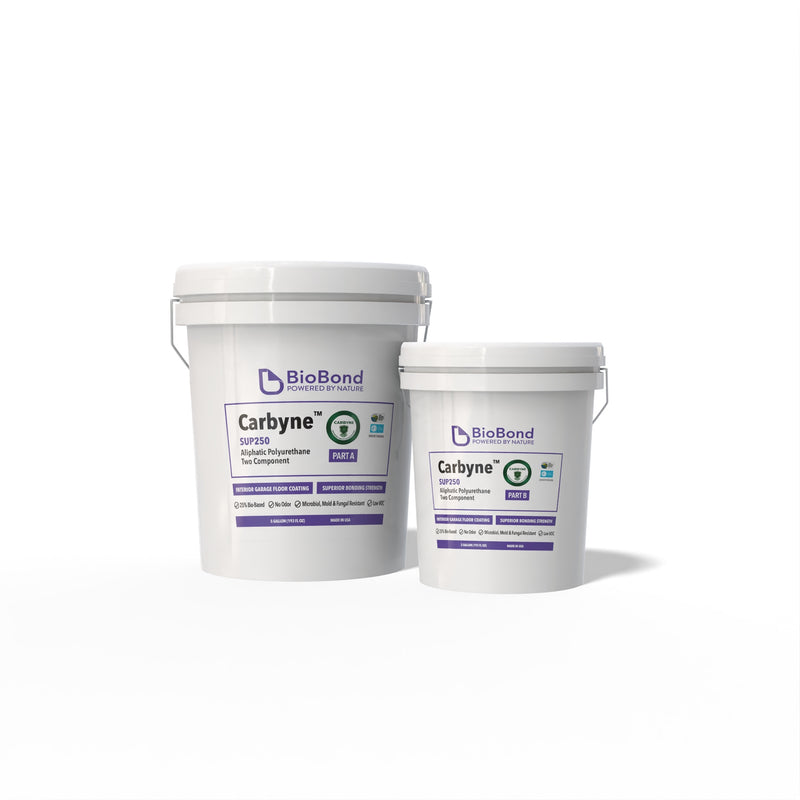
Carbyne™ SUP250 1G Kit
Carbyne™ SUP250 1G Kit
Regular price
$113.99 USD
Regular price
Sale price
$113.99 USD
Shipping calculated at checkout.
Quantity
Couldn't load pickup availability
Aliphatic Polyurethane Two Component Protective Coating
Carbyne™ SUP250 is a bio-based, water-based, two-component aliphatic polyurethane coating engineered specifically for garage floor applications. Designed to deliver long-term surface protection in residential and light commercial garages, Carbyne™ SUP250 combines ease of application with professional-grade durability.
Formulated to perform on properly prepared concrete substrates, Carbyne™ SUP250 provides exceptional abrasion resistance, strong adhesion, and long-lasting performance under vehicle traffic, foot traffic, and daily garage use. With low VOCs and no odor, it supports improved indoor air quality during installation—making it well suited for garages attached to living spaces.
Share
Performance You Can Rely On
Advantages
- Low Odor
- Low VOC
- 25% Bio-Based
- Microbial Resistant
- Best-in-Class Abrasion Resistance & Adhesion to Concrete
- Durable and Long Lasting
- Mold Resistant
- Fungal Resistant
- Contributes to LEED Credits
- Intertek Clean Air Gold Certified
- USDA Biopreferred
Key Benefits
- Two-component aliphatic polyurethane for enhanced durability
- Best-in-class abrasion resistance for long-lasting surface protection
- Strong adhesion to concrete, ceramic, wood, and metal
- Low VOC formulation with no odor, suitable for occupied spaces
- UV and corrosion resistance for extended coating life
- Water-based system designed for easier application and cleanup
- Available in matte and gloss to meet aesthetic and functional requirements
MORE INFORMATION
Collapsible content
Directions for Use
Shake well. Use a pump sprayer. Apply evenly to dry surface. Allow 24–48 hrs to cure depending on weather.
Clean-Up: Soap and water.
All Documents
FAQs
What is the best garage floor coating system for hot tire pickup and oil stains?
A high-performance multi-layer coating system is typically the best choice for resisting hot tire pickup and oil stains. Carbyne™ is designed as a complete garage floor coating solution that combines strong adhesion, durable build, and a protective topcoat to help reduce staining, improve cleanability, and hold up in demanding residential and commercial garage environments.
What is hot tire pickup and how do you prevent it in garage floor coatings?
Hot tire pickup happens when warm vehicle tires soften or stress a coating surface enough to pull it loose from the concrete. Preventing it starts with proper concrete preparation, moisture evaluation, the right primer and base coat, and a properly cured topcoat. A complete system approach helps reduce the risk of coating failure.
Polyaspartic vs epoxy garage floor coatings: which is better and why?
Neither is universally better in every situation. Epoxy can provide excellent build, bond strength, and design versatility, while polyaspartic topcoats are often valued for abrasion resistance, UV stability, and faster return to service. The best performing garage floor is usually a system that uses each chemistry where it performs best rather than relying on a single layer alone.
What is the most durable garage floor coating system?
The most durable garage floor coating system is one that combines proper surface preparation with multiple compatible layers engineered for adhesion, impact resistance, abrasion resistance, and chemical resistance. Durability depends on the full system, not just one product.
How do I prep concrete for a garage floor coating to avoid failure?
Concrete should be properly cleaned, mechanically profiled, and evaluated for contamination, cracks, previous coatings, and moisture issues before coating installation. Inadequate prep is one of the main reasons coatings fail. Good preparation helps the coating system bond correctly and perform long term.
Why do garage floor coatings peel and how do you prevent it?
Peeling is commonly caused by poor surface preparation, moisture vapor issues, contamination in the slab, weak concrete, or improper installation between coats. Prevention starts with proper prep, moisture assessment, and using a compatible coating system installed according to specification.
What causes bubbling or delamination in garage floor coatings?
Bubbling or delamination can happen because of trapped moisture, outgassing from concrete, surface contamination, improper mixing, poor recoat timing, or incompatible layers. A professionally designed system and careful installation help reduce these risks.
How long should a garage floor coating cure before parking a car on it?
Cure time depends on the specific system, temperature, humidity, and site conditions. Some floors may be ready for light foot traffic sooner than vehicle traffic. It is important to follow the product-specific cure schedule rather than assuming all coating systems perform the same way.
What coating resists brake fluid, gasoline, oil, and harsh cleaners?
A properly specified garage floor coating system with a chemically resistant topcoat is the best approach for resisting automotive fluids and aggressive cleaners. Carbyne™ is designed for demanding garage environments where chemical exposure, staining, and repeated cleaning are common concerns.
What is the difference between flake, quartz, mica, and metallic garage floor coating systems?
Flake systems create texture, visual variation, and improved coverage. Quartz systems are often chosen for added durability and slip resistance. Mica systems provide a more premium decorative finish with depth and natural-looking variation. Metallic systems create custom, movement-rich visual effects for a more design-driven floor. Each aesthetic can be paired with different performance goals depending on the environment.
What are the benefits of mica garage floor coatings vs flake coatings?
Mica floors typically offer a more refined decorative appearance with depth, shimmer, and visual complexity. Flake floors are often chosen for their familiar look, strong coverage, and practical stain-hiding benefits. The right choice depends on whether the priority is design appearance, texture, slip profile, or overall visual style.
What garage floor coating system works best with quartz broadcast floors?
Quartz broadcast floors perform best with a system designed specifically for broadcast installation, surface build, and topcoat protection. These systems are often selected where durability, slip resistance, and long-term wear are important.
How do you install metallic design epoxy floors in garages?
Metallic floors require careful surface prep, a properly applied base layer, and trained installation techniques to create the intended visual movement and finish. Because metallic systems are highly design-sensitive, installer experience matters just as much as product selection.
What decorative garage floor coating systems last the longest: flakes, quartz, mica, or metallic?
Longevity depends more on system design, prep quality, traffic level, and topcoat protection than on decorative media alone. Quartz systems are often selected for high-wear performance, while flake, mica, and metallic systems can also deliver long service life when installed as part of a well-built coating system.