6 Things to Look For in a Safer and Healthier School Adhesive

From art projects and science experiments to everyday classroom activities, adhesives are a staple in schools and homes. But not all school adhesives are made the same, and what’s inside the bottle matters more than most people realize.
For parents, teachers, and administrators, choosing safer school adhesives means looking beyond brand familiarity and focusing on how materials affect kids’ health, indoor air quality, and daily classroom use.
Here’s what actually makes an adhesive safer and healthier for kids.
1. Low VOCs for Better Indoor Air Quality

Volatile organic compounds (VOCs) are chemicals that can off-gas into the air during use and drying. In enclosed spaces like classrooms, repeated exposure can impact indoor air quality, especially when projects happen frequently and ventilation may be limited.
School adhesives formulated with low VOC content help reduce airborne emissions during everyday use. They also tend to have less odor, which means fewer distractions, headaches, and discomfort for students and teachers alike.
2. Adhesives Free of Vinyl Acetate Matter

Many traditional school adhesives rely on vinyl acetate–based chemistry, a common ingredient used in conventional white adhesives. While widely used, vinyl acetate has raised increased concern in recent years, particularly after its addition to California’s Proposition 65 list.
For parents and educators seeking safer and healthier options, vinyl acetate–free school adhesives offer an important alternative. Removing vinyl acetate from adhesive formulations helps reduce unnecessary chemical exposure in classrooms and homes — especially for younger children who use adhesives frequently.
Choosing vinyl acetate–free adhesives reflects a more thoughtful approach to material selection and child-focused product design.
3. No Added Microplastics

Many conventional school adhesives rely on petroleum-based polymers that introduce microplastics into everyday environments. These particles don’t disappear once a project is finished, they persist long after.
School adhesives made without added microplastics help reduce unnecessary plastic exposure while still delivering reliable bonding performance. For families and schools looking to make more informed material choices, this is an increasingly important consideration.
4. Low Odor for Everyday Classroom Use
 Odor isn’t just unpleasant, it’s often a sign that a product is releasing chemicals into the air.
Low-odor school adhesives make classrooms more comfortable, especially for younger children and individuals with sensitivities. Teachers can use them daily without worrying about lingering smells disrupting learning environments.
5. Performance Kids and Teachers Can Rely On
 Safer and healthier adhesives still need to work — and work well.
A quality school adhesive should:
-
Bond paper, cardboard, and light materials reliably
-
Apply smoothly without excessive mess
-
Dry efficiently without long wait times
-
Hold projects together without constant reapplication
When adhesives fail, they lead to wasted materials, frustration, and more product usage overall. Performance is a critical part of what makes an adhesive practical for classrooms.
6. Transparency You Can Trust

Parents and educators are asking better questions about what’s in the products kids use every day. Clear communication about ingredients, VOC levels, and formulation choices builds trust and helps families make informed decisions.
Adhesives designed with transparency in mind signal a commitment to safety, performance, and responsibility — not just compliance.
Choosing the Right School Adhesive

Together, these factors define what it truly means for an adhesive to be safer and healthier for kids.
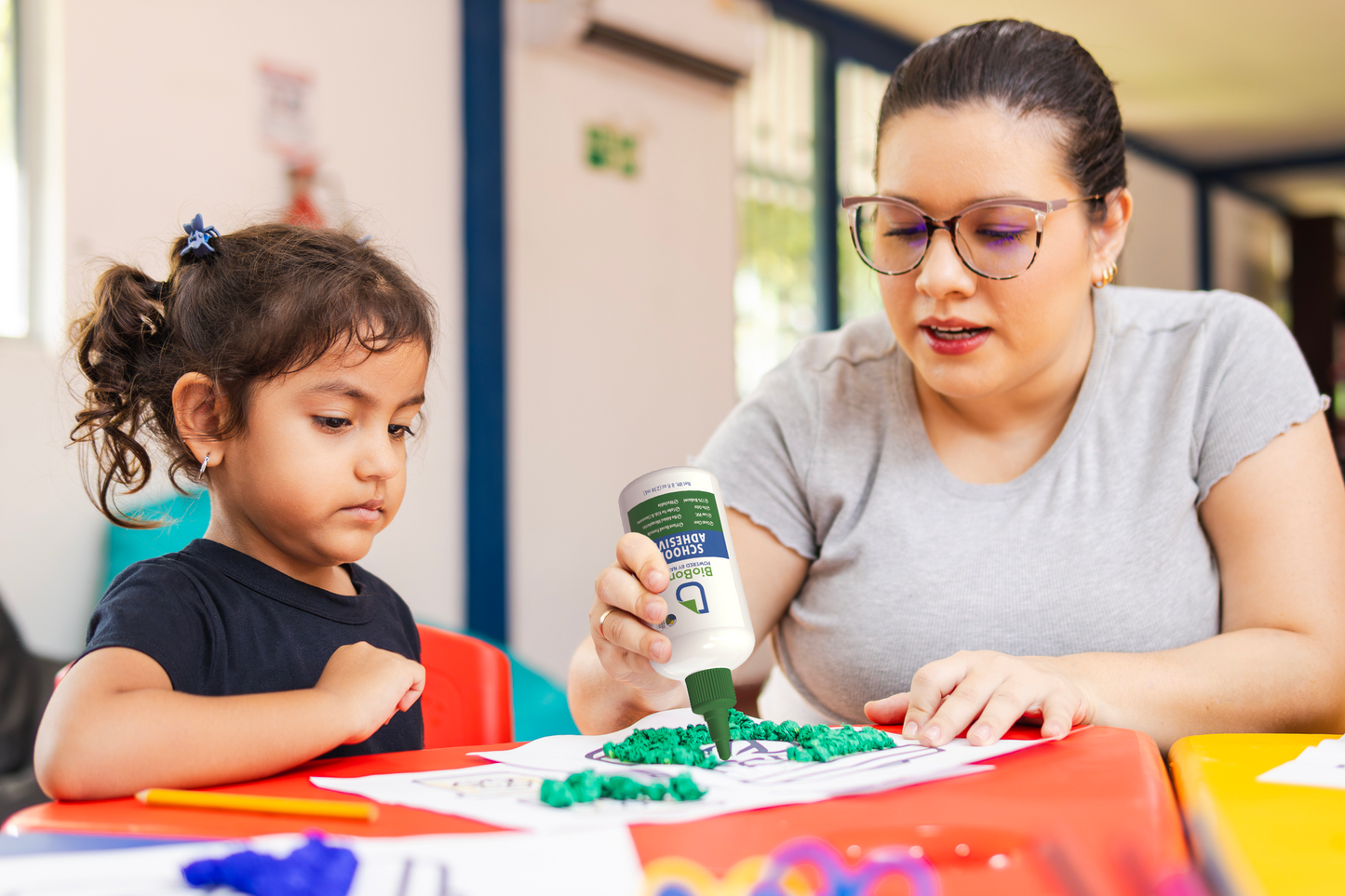
BioBond School Adhesive was developed with these priorities in mind, delivering dependable performance while supporting healthier learning environments at school and at home.